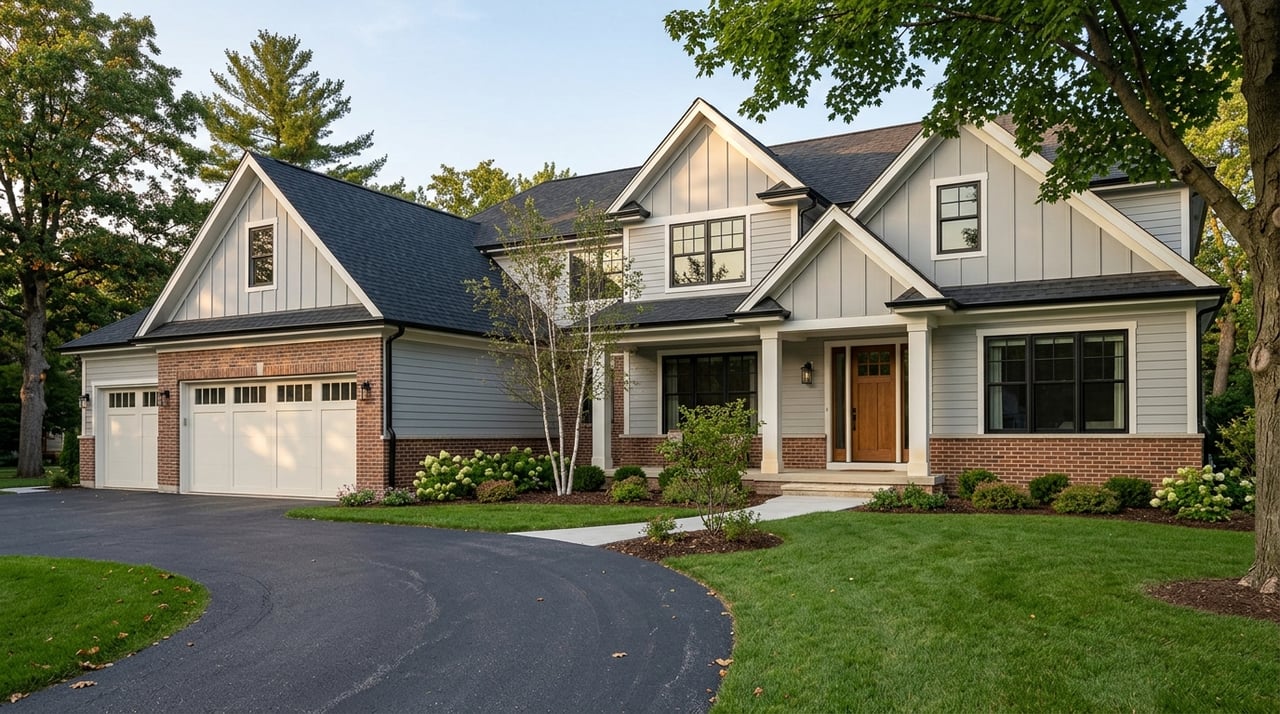
Medina MN Home Styles and Acreage Living Explained
If you have ever wondered whether one city can offer both neighborhood convenience and room to spread out, Medina makes a strong case. For buyers who want more land, more breathing room, or simply more options in how they live, Medina stands out in the western Twin Cities. You will find a mix of acreage properties, subdivision neighborhoods, and small-town-style pockets that create a housing landscape with real variety. Let’s take a closer look.
Medina is shaped by land, not just by lot lines. The city describes itself as working to retain its rural heritage while also supporting residential, recreational, and business activity, and the Metropolitan Council classifies it as both Diversified Rural and Suburban Edge.
That matters when you start home shopping. Instead of one uniform suburban pattern, you are looking at a city with large-lot residential areas, agricultural land, clustered housing, preserved open space, and lower-density neighborhoods all within the same community.
The numbers help tell that story. Medina has an estimated population of 6,846 across 25.55 square miles, with a 93.5 percent owner-occupied housing rate and a median owner-occupied home value of $660,800. In simple terms, this is a small, established, ownership-focused market with space built into its identity.
When people talk about acreage living in Medina, they are usually referring to the city’s rural residential areas. In Medina’s comprehensive plan, rural residential is defined as larger tracts of land and homesteads, including hobby farms, on parcels without city sewer and water service.
For you as a buyer, that often means more distance between homes and a stronger sense of privacy. It can also mean living closer to wetlands, agricultural land, trails, and preserved natural areas that shape the feel of daily life.
It also means understanding utilities and infrastructure. The city states that urban services will not be provided to agricultural, rural residential, or future development areas during this planning cycle, and the city’s water plan notes that roughly 700 homes outside the service areas are served by private wells.
That does not make acreage living better or worse than subdivision living. It simply means the experience is different, and your home search should account for the property’s systems, maintenance needs, and long-term fit with your lifestyle.
A big reason Medina feels spacious is the city’s land-use mix. According to the 2040 comprehensive plan, the 2016 land-use inventory was led by rural residential land at 26.0 percent, wetlands at 23.1 percent, agricultural land at 18.7 percent, and park, recreational, or preserve land at 10.7 percent.
Open water accounted for 6.9 percent, while single-family detached land use accounted for 5.4 percent. That balance helps explain why Medina often feels more open and less tightly built than many inner-ring suburbs.
For buyers, this can be part of the appeal. You are not just choosing a house. You are often choosing a setting that includes natural buffers, scenic drives, and a lower-density pattern that feels distinct within the metro area.
Medina is not all acreage and rural parcels. The city also includes suburban-edge areas with more conventional neighborhood development, including low- and medium-density residential subdivisions.
The Metropolitan Council describes suburban-edge areas as places with residential subdivisions, cul-de-sacs, and limited access to major thoroughfares. In Medina, city park service areas help point to some of these neighborhood clusters.
For example, The Park at Fields of Medina serves Fields of Medina, Fields of Medina West, Bridgewater at Lake Medina, and Foxberry Farms. Medina Morningside Park serves Morningside and Keller Estates, while Hunter Lions Park serves homes south of Hamel Road along Hunter Drive.
If you want a more traditional neighborhood setup, these types of areas may be worth watching. They can offer a different rhythm than acreage properties, with homes grouped more closely and daily routines shaped more by subdivision living than by larger land parcels.
One of Medina’s more distinct pockets is Uptown Hamel. The city’s land-use plan says commercial uses are concentrated along Highway 12 and Highway 55 and in Uptown Hamel, where residential and commercial uses can mix on adjacent parcels or within the same building.
The city also calls for a traditional small-town look in this area, with features like brick facades, traditional street lighting, and boardwalks. Residential density in Uptown Hamel is planned between 4 and 15 units per acre, which makes it different from both large-lot rural areas and lower-density subdivisions.
The city’s housing plan also identifies higher-density residential areas near Highway 12 and Baker Park Road, Highway 55 and Tamarack Drive, Medina Road and Brockton Lane, and Highway 55 and County Road 101. For buyers who want Medina’s location without as much land to manage, these areas may provide a more conventional neighborhood-scale alternative.
In Medina, lifestyle is closely tied to open space and recreation. Baker Park Reserve is one of the city’s biggest amenities, with 2,700 acres on Lake Independence, 12.5 miles of biking trails, 9.1 miles of cross-country ski trails, 9 miles of horseback riding trails, 203 campsites, and access to 917 acres of water.
Within the reserve, Baker National Golf adds another layer of appeal. It is a 210-acre facility with practice areas, a driving range, a 9-hole executive course, and an 18-hole championship course.
The city also highlights local trails, the Lake Independence Regional Trail, Hamel Legion Park, Rainwater Nature Area, and Tomann Preserve. If you are drawn to places where the outdoor setting is part of everyday life, Medina offers that in a very real way.
Medina still functions as a driving-oriented community. Census Reporter data shows that 51 percent of workers drove alone, 41 percent worked at home, and public transit was 0 percent, while QuickFacts reports a mean travel time to work of 25.4 minutes.
That can be useful context if you are balancing space with access. The Hamel Community Building page places that part of Medina about 20 miles from downtown Minneapolis, which helps frame Medina as a quieter edge-of-metro option rather than a remote location.
The city’s water plan also notes that Medina is most fully developed in its northeast quadrant along Highway 55, with additional development pockets on the western, southwestern, and southern boundaries. That pattern helps explain why your experience of Medina can vary quite a bit depending on where you focus your search.
The best home style for you depends on how you want to live day to day. A larger parcel may offer privacy, room for hobbies, and a stronger connection to natural surroundings, while a subdivision home may offer a more familiar neighborhood layout and less land to maintain.
As you compare options, it helps to think through a few practical questions:
These are not small details. In Medina, they shape the feel of your home just as much as square footage or finishes.
One of Medina’s strengths is that it does not force you into one lifestyle model. The city’s plans show a place where parkland, large lots, rural-residential parcels, subdivision neighborhoods, and a compact mixed-use center can all coexist.
That gives buyers more flexibility than they may expect. You might be looking for a property with room to spread out, a newer neighborhood near parks, or a home base that feels tucked away while still staying connected to the western Twin Cities.
If that mix sounds appealing, Medina is worth a closer look. And if you want help narrowing down which part of Medina best fits your goals, Nicole Stone can help you compare options and move forward with confidence.

We pride ourselves in providing personalized solutions that bring our clients closer to their dream properties and enhance their long-term wealth. Contact us today to find out how we can be of assistance to you!