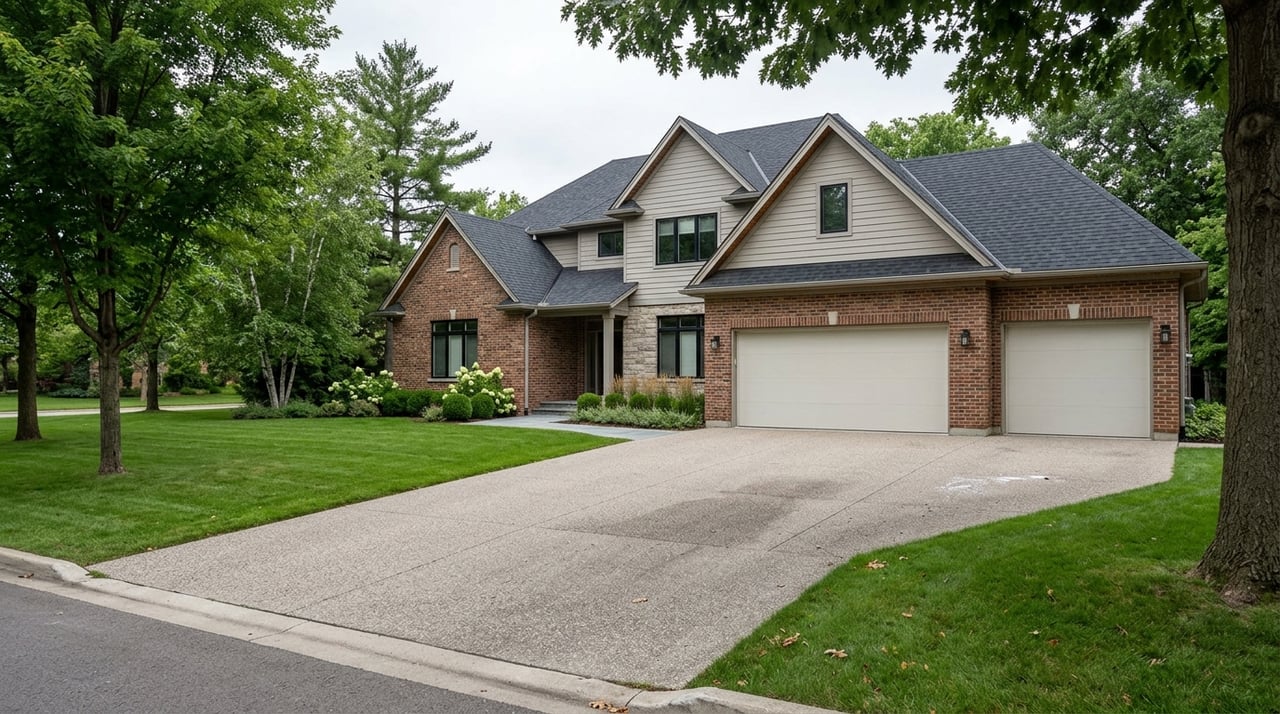
Moving to Medina MN for Acreage Living: What to Know
Thinking about trading elevator rides and shared walls for a little breathing room? If you have been eyeing more land, more privacy, and a quieter day-to-day routine, Medina may already be on your shortlist. This western Hennepin County city offers a very different rhythm than condo living, and understanding that shift can help you decide if it fits your next chapter. Let’s dive in.
Medina is not a dense, close-packed suburb that simply sits outside the city. It is a smaller western Hennepin County community with an estimated 7,209 residents in 2024 and a population density of 267.6 people per square mile. That lower-density feel shows up in the way homes are spaced, how roads function, and how much of daily life happens on your own property.
The city also has a strong identity around preserving rural heritage while supporting residential, recreational, and business activity. Medina’s planning documents describe it as primarily residential and agricultural, with about 38% of the city covered by lakes, wetlands, and floodplains. In practical terms, that means open space is not an afterthought here. It is part of the landscape.
If you are coming from a condo, acreage living can sound dreamy and a little vague at the same time. In Medina, it is a real and defined part of the housing picture. The city’s Rural Residential District requires a minimum lot area of 2.5 acres, which gives you a clear sense of how seriously land and separation are built into some parts of the community.
That does not just mean a bigger yard. It often means more distance between homes, more room for trees and landscaping, and a stronger sense of privacy. It also means your home experience shifts from building-managed convenience to property-centered living.
Medina’s housing plan reinforces that pattern. The city emphasizes conservation subdivision design, open space, tree preservation, and local-street access for new homes instead of direct access from county roads or state highways. The result is a community shape that feels less stacked and fast-moving, and more spread out and residential.
A condo can simplify a lot. Exterior maintenance, shared amenities, and compact living often make life easier for busy professionals, downsizers, or anyone who values a lock-and-leave lifestyle. Medina offers a different set of tradeoffs.
Here, the housing stock has long leaned toward detached homes. Medina’s housing inventory found that 85.4% of homes were single-family detached in 2014, and current Census data show 92.2% of occupied housing units are owner-occupied. That pattern tells you a lot about the lifestyle on offer.
Here is the simplest way to think about the shift:
For many buyers, that trade is exactly the point. You are not just buying a house. You are choosing a new daily experience.
One of Medina’s biggest advantages is how closely everyday life connects to nature and recreation. If your current condo life feels a little boxed in, this can be one of the biggest quality-of-life changes.
Baker Park Reserve is the city’s signature recreational asset. This 2,700-acre regional park on Lake Independence includes 12.5 miles of biking trails, 19.8 miles of hiking trails, 9 miles of horse trails, swimming beaches, camping, and Baker National Golf. That is not a small neighborhood park. It is a major outdoor amenity woven into the area’s identity.
Medina residents also have access to local trail connections, including Baker Park Reserve and the Lake Independence Regional Trail. The city classifies trails as paved, unpaved, and shoulder facilities, which gives you a better idea of the range of how people move through the community.
Hamel Legion Park adds another layer of everyday recreation. At almost 40 acres, it includes a community building, ballfields, tennis courts dual-striped for pickleball, skating, a sledding hill, and walking paths. Medina’s comprehensive plan also identifies Wolsfeld Woods Scientific and Natural Area as part of the regional park system, which further supports the area’s nature-forward feel.
Moving from a city condo to Medina usually means adjusting your expectations around mobility. This is not an in-town, walk-to-everything setup. Recent Census data show a mean travel time to work of 26.3 minutes, which points to a typical outer-suburban commute pattern.
Medina’s transportation plan is organized around TH 55 and county-road access, with long-range concepts tied to the TH 55 and I-494 corridor in nearby Plymouth. If you are used to relying on short rides, transit lines right outside your building, or walking for errands, you will likely notice the difference.
That said, Medina is not completely disconnected. Transit Link serves areas where regular-route transit is limited or unavailable, and Medina is in that service area. Nearby commuter options also matter, since Plymouth Metrolink and Maple Grove Transit offer express commuter service to downtown Minneapolis and the University of Minnesota.
More land can feel exciting on showing day. It can also come with responsibilities that are easy to underestimate if you have spent years in a condo building. Medina offers several good examples of what that can look like in real life.
For starters, yard waste is its own category of homeownership. Medina provides a brush and compost site next to City Hall where residents and property owners can dispose of leaves, grass clippings, branches, brush, and other yard debris. That is a useful local resource, and it also hints at the scale of upkeep some properties require.
Some homes may also rely on septic systems rather than city sewer. Medina requires septic tanks to be pumped and inspected at least once every three years, and the city’s sewer plan notes 702 known septic systems. If you are coming from a condo, that is a very different kind of maintenance calendar.
Tree care is another important part of ownership. Medina’s environmental guidance highlights tree placement, tree health, emerald ash borer awareness, and the fact that diseased trees on private property are the owner’s responsibility. On a larger lot, trees can be one of your greatest assets, but they also need attention over time.
The city also treats weeds, stormwater, wetlands, and runoff as stewardship issues. That means some homes come with more landscape management than a former condo owner may expect. Even regular trash service feels more household-based here, with contracted residential garbage, recycling, and organics recycling for single-family residents, including Green Bag organics at no additional fee.
Medina can be a great match if you are looking for space, privacy, and a more land-oriented lifestyle in western Hennepin County. It may especially appeal to buyers who want detached homes, access to major outdoor recreation, and a setting that feels quieter and less compressed than urban living.
It may be a less natural fit if your top priority is low-maintenance living, short walks to daily errands, or a building-managed setup. Neither lifestyle is better. They are just built for different seasons of life.
A helpful way to frame the decision is to ask yourself a few honest questions:
If you answer yes to most of those, Medina may feel less like a compromise and more like an upgrade that fits where you are now.
Not every Medina property will live the same way. Even within the same city, lot size, utilities, access, and surrounding land features can shape your day-to-day experience.
As you compare homes, pay close attention to:
Those details matter just as much as square footage or finishes when you are making a move from condo living to acreage living.
A move like this is not just about changing addresses. It is about changing how you live every day, from your commute to your weekends to the way you care for your property. When you understand Medina on that practical level, it becomes much easier to tell whether the lifestyle truly fits your goals.
If you are weighing a move from city condo life to more space in the western Twin Cities, working with a local expert can help you sort through the details that photos alone will never show. When you are ready to explore Medina and compare your options, connect with Nicole Stone for thoughtful guidance tailored to your next move.

We pride ourselves in providing personalized solutions that bring our clients closer to their dream properties and enhance their long-term wealth. Contact us today to find out how we can be of assistance to you!